
LinkedIn follow-up messages that don't sound desperate
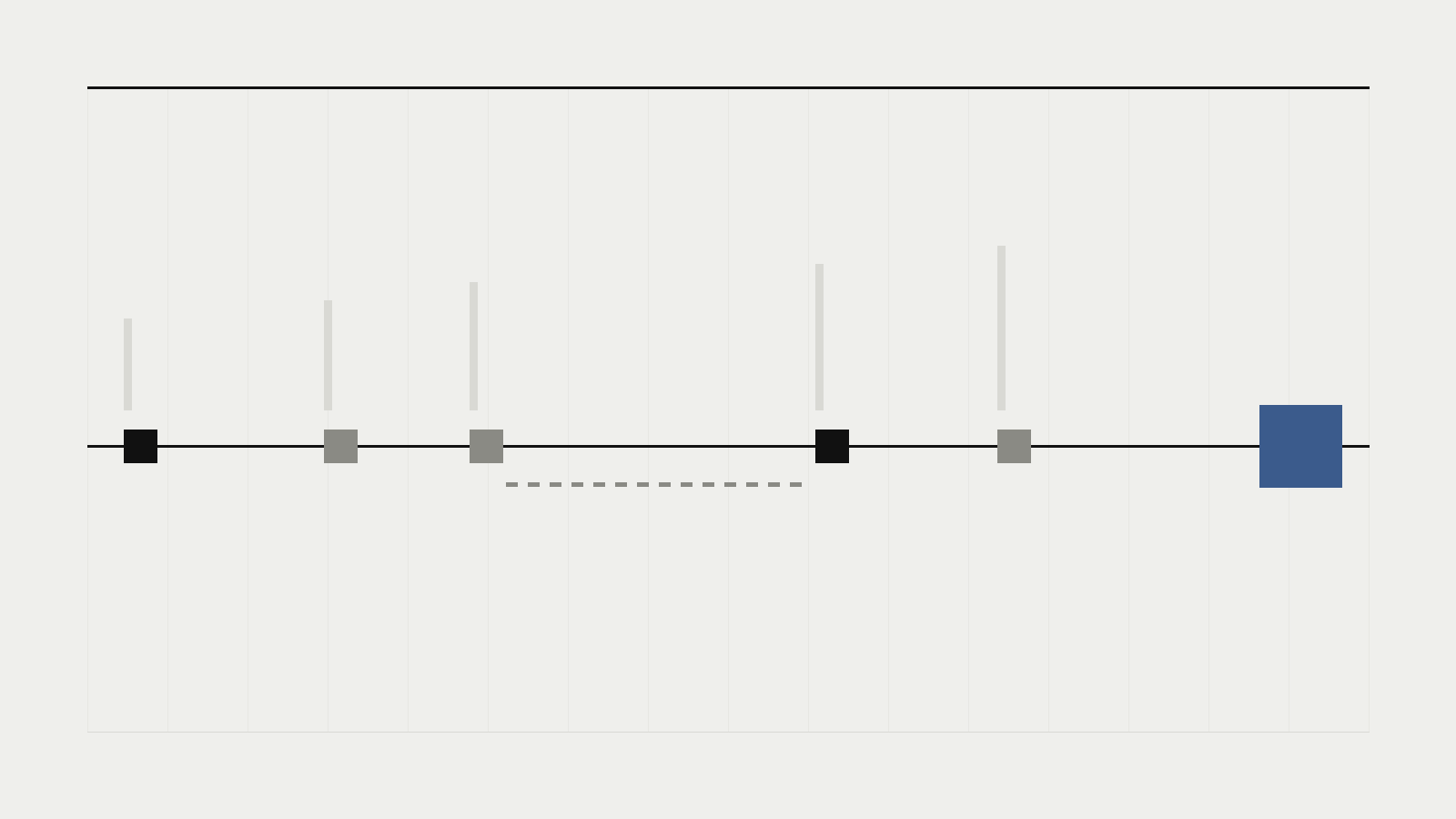
A follow-up should add one new reason to reply, not "just bumping this". And what you send depends on one question most templates ignore: who sent the last message?
The pages ranking for this mix job seekers, recruiters and automation tools that schedule follow-ups for you. This one is for founders following up sales conversations by hand, stage by stage.
Who sent last?
Choosing a follow-up
Our rule of thumb, not data.
If they sent the last message, you don't need a follow-up. You need a reply, today. That's the most common mistake in a founder's inbox: people "waiting for a follow-up" from someone who's actually waiting on them.
Timing table
Our rule of thumb, not data. Adjust to the pace of each conversation.
| Situation | Wait before following up | What to add |
|---|---|---|
| They sent last | Don't wait: reply the same day | An answer and one question |
| You opened; no reply | 7 days | A specific question about their post, role or news |
| They accepted your invitation, never replied | 3–5 days | An easy, open question |
| Engage stage went quiet | 5–7 days | Something useful tied to what they told you |
| Qualify stage went quiet | 7 days | Their own words about the problem or timing |
| You asked for a call; no reply | 3–4 days | A different time, or hand them the choice |
| They said "next quarter" or a month | Until then | Their stated timing |
| Second follow-up, still nothing | 14 days | A new reason, or a clean close |
Follow-ups by stage
All written by us. Placeholders in [square brackets]; character counts include them.
Open
| Situation | Follow-up | New reason to reply | Characters |
|---|---|---|---|
| You sent the opener; no reply after a week | "Also meant to ask: did [thing from their profile or post] work out the way you hoped?" | A specific question about them | 85 |
| They accepted your invitation but never replied | "Thanks for connecting. What are you working on at the moment that's taking most of your time?" | Gives them an easy, open question | 93 |
| Your first message was too long | "Shorter version of my last note: how are you handling [task] at the moment?" | Admits the last one was long; one line | 75 |
Engage
| Situation | Follow-up | New reason to reply | Characters |
|---|---|---|---|
| They replied once, then went quiet | "Thought of you when I read [relevant thing]. Does it match what you're seeing at [company]?" | Something useful, tied to what they said | 91 |
| You asked a question; they didn't answer | "No worries if that was a strange question. Simpler one: what's the most annoying part of [area] right now?" | Makes it easier to answer | 106 |
| They said they'd get back to you | "Hope the week's been kind. You mentioned [their thing]; how did it go?" | Follows up on their news, not your pitch | 70 |
Qualify
| Situation | Follow-up | New reason to reply | Characters |
|---|---|---|---|
| They named a problem then went quiet | "Quick one on [problem]: did it get better, or is it still costing you [time or money they mentioned]?" | Brings back their own words | 101 |
| Timing was 'next quarter' | "You said [problem] was a next-quarter job. Is that still the plan, or has it moved?" | Respects the timing they gave | 83 |
| They needed to check with a colleague | "Did [colleague] have a view? Happy to send two lines they can read in a minute." | Makes the internal step easy | 79 |
Invite
| Situation | Follow-up | New reason to reply | Characters |
|---|---|---|---|
| You offered times; no reply | "Neither time worked, I guess. Want to suggest one that suits you better?" | Hands them control | 72 |
| They said yes but didn't book | "Here's the slot I'm holding for you: [day, time]. Shall I keep it?" | One clear yes or no | 66 |
| They no-showed | "Looks like today got away from you. Want to try [day] instead, or is it better to leave it for now?" | No guilt, two easy answers | 99 |
Re-opening a cold thread
| Situation | Follow-up | New reason to reply | Characters |
|---|---|---|---|
| Cold for 30+ days | "Saw [recent post or news]. Is [problem they mentioned] still on the list?" | New reason, old context | 73 |
| Cold after a 'not now' | "You said [month] might be better. Is it still worth a chat, or should I leave you be?" | Uses their timing; permission to stop | 85 |
| Last attempt | "I'll stop nudging after this one. If [problem] comes back up, my DMs are open." | A clean close that often gets a reply | 78 |
When to stop
- They said no. Thank them and stop.
- Three follow-ups, no reply. Send the clean close ("I'll stop nudging after this one…") and stop.
- They're not your ICP. Close politely, even if they're friendly.
Stopping is part of the routine. A clean close often gets a reply, and it keeps your inbox honest about which conversations are real.
What not to do
- No automated follow-up chains. Tools that send follow-ups on a timer are exactly the activity LinkedIn's policy describes: it doesn't allow software that automates activity on its site (LinkedIn Help).
- No guilt. "Did you see my last three messages?" never works.
- No new pitch. A follow-up isn't the place to add features. Keep it short; LinkedIn's recruiter data found InMails under 400 characters got 22% higher response rates than average, and individually sent InMails did about 15% better than bulk ones (LinkedIn Talent Blog).
- No irrelevant nudges. 73% of B2B buyers say they actively avoid suppliers who send irrelevant outreach (Gartner).
InMail response uplift, recruiter InMails
Relative uplifts, not response rates. The individual-versus-bulk figure is 'about 15%'. Recruiter InMails that were sent, not a measure of whether the recipient saw the message.
Source: LinkedIn Talent Blog, 2022 (recruiter InMail data, not sales)
Where a received InMail lands is a different problem from how to write one. See what InMail is, and why the warm ones get missed.
For opening messages, see our LinkedIn message templates. For knowing which conversations deserve a follow-up first, see warm leads and the LinkedIn lead generation playbook.
Where DealGate fits
DealGate shows which conversations are waiting on you and which have gone quiet, and drafts a follow-up in your voice that adds a reason to reply. Coming soon: replies auto-send within caps and pacing, with a safety pause if LinkedIn shows a warning. Pricing: $0.99 for your first month, then $29/mo founding price ($49/mo list).
FAQ
What should I say in a follow-up LinkedIn message?
One new reason to reply, based on something they said or did. Ask a specific question about their situation, bring back their own words, or share something useful that relates to what they told you. Never just 'bumping this'.
What is a good follow-up message?
Short, specific and easy to answer. For example: 'You said onboarding was a next-quarter job. Is that still the plan, or has it moved?' It shows you listened and gives them a one-line reply.
How many times should I follow up on LinkedIn?
Our rule of thumb is up to three follow-ups after your last message, each with a new reason to reply, spaced further apart each time. Then send a clean close and stop. If they've said no, stop straight away.
Sources
Accessed 10 Oct 2026.
- LinkedIn Help, "Prohibited software and extensions": https://www.linkedin.com/help/linkedin/answer/a1341387
- LinkedIn Talent Blog, "These InMails get the best response rates" (recruiter InMail data): https://www.linkedin.com/business/talent/blog/talent-strategy/these-inmails-get-best-response-rates
- Gartner, "Gartner Sales Survey Finds 61% of B2B Buyers Prefer a Rep-Free Buying Experience", 25 Jun 2025: https://www.gartner.com/en/newsroom/press-releases/2025-06-25-gartner-sales-survey-finds-61-percent-of-b2b-buyers-prefer-a-rep-free-buying-experience
- Timing table and templates: DealGate's rule of thumb and our own writing.